Insights & Reports Healthcare CategoriesMed TechOphthalmologyPharma & BiopharmaTherapeutic Areas
Recognised but undertreated: cataract surgery as the gateway to ocular surface care
Published on 19 June 2026
Written by
Peter Hays
Europe’s cataract surgery guidance now asks surgeons to address the ocular surface before they operate. For companies, that makes the most common operation in ophthalmology the moment a large, undertreated population finally comes within reach.
Executive summary
Ocular surface disease (OSD), a broad group of conditions that includes dry eye, eyelid inflammation and irregularities of the corneal surface, is highly prevalent: dry eye alone affects an estimated 15-30% of adults in European countries, and many of those affected are not actively managing it. Dry eye rarely feels urgent, and older patients tend to wait until vision fails before they present. But cataract surgery brings these patients back onto the treatment pathway. First, it is the moment when part of this population comes under an ophthalmologist’s care. Second, both surgeon and patient have reason to treat the disease, since good results depend on it, especially with premium lenses, where the patient has paid for a sharp outcome.
Cataract surgery is the most common operation in ophthalmology, with more than 5 million procedures a year in the EU14. And what patients expect from it is evolving - many now want sharp, glasses-free vision rather than simply the removal of a clouded lens, helped by premium intraocular lenses (the artificial lenses implanted during surgery) that can correct for distance, near vision and astigmatism at once. Getting those results depends on precise measurements of the eye beforehand, and those measurements depend in turn on the health of the ocular surface: the tear film, the front surface of the cornea and the eyelid margins that together form the eye’s outermost optical layer. Untreated, the disease distorts those measurements and undermines the result.
Guidance has now caught up with the evidence. In 2025, the ESCRS added preoperative dry eye treatment to its formal cataract surgery guideline - the first time a major European society has written surface care into the surgical pathway, following the equivalent American framework from 2019. Recommendations are now on paper on both sides of the Atlantic, but few surgeons have built surface care into their routine and few patients know to ask. That gap presents a commercial opportunity: demand for the diagnostics that detect surface disease and the range of drops, lid treatments and tear-film therapies that correct it before surgery. This opportunity is set to grow as surface care becomes routine in the premium segment where that result is paid for directly. This piece looks at why the ocular surface now shapes the surgical result, what is driving the shift towards treating it, and what that means commercially for companies working in ophthalmic surgery and surface care across European markets.
Introduction

A generation ago, a successful cataract operation meant that patients could see again. Today they expect to see well: clearly, at several distances, and without glasses. Premium intraocular lenses have made that possible, and in doing so have turned a restorative procedure into a precision one. The catch is that a precision result is only as good as the measurements behind it, and those measurements are taken through the ocular surface. A part of the eye that was once a clinical afterthought has become one of the variables that decide whether the patient is satisfied.
That shift matters commercially because of where the value now sits. Demand within cataract surgery is moving towards the premium segment, where patients pay out of pocket for a sharper result and a missed target is felt directly, by patient and surgeon alike. Industry estimates put premium uptake broadly in the 10-25% range even in more affluent European markets 15, and higher in the US, where these lenses fall outside Medicare cover and are paid for entirely out of pocket 19. The move is gradual but steady: the segment’s market leader reports advanced-lens penetration still climbing by around a percentage point over the past year 21. And it concentrates the most valuable demand where a healthy surface is most critical.
That is where both the opportunity and the challenge emerge. The surface disease capable of derailing these results is common, easily missed and, across much of the at-risk population, untreated. It is also why the timing matters: as of 2025, European surgical guidance formally asks surgeons to act on the surface before they operate, turning a decade-old clinical talking point into a near-term commercial question.
A common, often silent problem
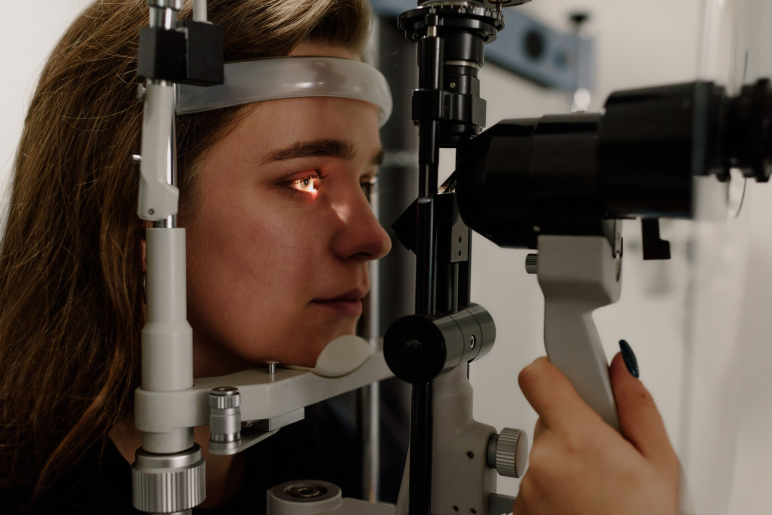
Ocular surface disease is a well-recognised problem. Multiple studies suggest that its signs, which span dry eye, eyelid inflammation, gland dysfunction and irregularities of the corneal surface, are common in patients coming forward for cataract surgery, and in some groups are present in the majority 1, 2. In one US study of cataract patients (the PHACO study), 77% of eyes had positive corneal staining (a marker of surface damage) and 63% of patients had a tear break-up time of five seconds or less (a sign of an unstable tear film), yet many had not previously been diagnosed or did not report the usual dry eye complaints 1. The condition is frequently silent in the older population that makes up the bulk of cataract referrals, which means symptom-based screening can miss much of it.
Look beyond the surgical clinic and the same disease sits largely untreated across a much wider population. Dry eye grows more common with age, overlapping heavily with the cataract age group, but it rarely feels urgent enough to send anyone to an ophthalmologist, so most of those affected never come. The figures are large: population-based studies across Europe, including Spain, France and the UK, put prevalence as high as a third of UK adults 8,9, while German claims data show cataract to be the most common ocular comorbidity in diagnosed dry eye patients, present in nearly half of cases (48.5%) 10. The result is a large, ageing pool of people carrying treatable surface disease who, left to themselves, will not present until failing sight forces the issue.
Why it affects surgical outcomes
The consequences show up directly in the numbers that decide which lens a patient receives. When the surface is unhealthy, the same eye measured twice can give meaningfully different readings: one study found that patients with an unstable, over-concentrated tear film had significantly more variation in their corneal measurements between repeat scans than patients with a healthy surface 5. Those corneal measurements are one of the main inputs into choosing the lens, and errors in them can feed through into the wrong lens being selected 6. In one small 2024 study, the eyes with the most measurement variability were also those with the least stable, most heavily stained surfaces. They missed their intended vision target in 45.5% of cases, against 17.9% of eyes with stable measurements 7. With premium lenses, where the patient has paid specifically for sharp vision without glasses, a miss of that kind is the difference between a delighted patient and a disappointed one.
A gap between evidence and practice
Surgeons overwhelmingly acknowledge the problem, but most have not changed their preoperative routines to address it. In the ASCRS clinical surveys that prompted the society’s preoperative guidance, more than 90% of respondents felt that even mild-to-moderate dry eye affected patient satisfaction after surgery, yet fewer than 10% were using modern point-of-care diagnostic tests in their routine preoperative assessments 3.
This is a workflow problem rather than a knowledge problem. Preoperative assessments are conducted under time pressure, and tests for ocular surface disease have not historically been embedded in the standard sequence of pre-surgery checks. Depending on severity and treatment choice, optimisation may require anything from immediate tear-film stabilisation to several weeks of therapy before repeat measurements are considered reliable, which can delay surgery in a pathway already under scheduling pressure. The result is a persistent gap between what the evidence recommends and what happens in the clinic.
Patients are no more likely to prompt the conversation. Many people with cataracts do not realise they also have ocular surface disease, even when it is present 20, and where symptoms do occur they are easily put down to the cataract itself. With neither surgeon nor patient routinely raising it, a recognised need rarely converts into demand, which is why companies have a role beyond supply: building the clinical and patient awareness that brings surface care into the routine is itself part of the opportunity.
The guidelines have moved
The clearest signal of change came in 2025, when the ESCRS’s cataract surgery guideline advised surgeons to consider treating dry eye disease before they operate 4. Europe is the more recent mover - the ASCRS published a formal preoperative screening-and-treatment framework for ocular surface disease in 2019, the first designed specifically for the surgical patient, and is now updating it 3. With guidance now in place in both the US and Europe, the open question is how quickly surface care becomes routine. The next few years, as the European guideline beds in, are when that will be decided.
These frameworks set out a clinical scope rather than a product list: they tell the surgeon to look for and address not only dry eye but also eyelid margin disease, gland dysfunction, irregularities of the corneal surface layer, and surface deposits, each calling for a different intervention 11. Several of these distort the surface the eye is measured through, which is what makes them matter for the surgical result.
The product opportunity therefore spans well beyond lubricants, with each surface problem pointing to a different category: diagnostic tools to detect and triage the disease before surgery; tear-film stabilisation and lubricants for an unstable or deficient tear film; anti-inflammatory drops for the inflammatory component of dry eye; lid care for eyelid margin disease and gland dysfunction; and biological therapies to repair a damaged corneal surface.
The commercial picture
The opportunity lies in what happens if surface care becomes a routine step before surgery rather than an occasional one. Embed screening into the cataract work-up and an intermittent, symptom-led trickle of treatment turns into a repeatable source of preoperative demand: a diagnostic check, and where the surface needs work, a course of treatment before measurements are taken.
That demand is not spread evenly. It concentrates in the premium, private-pay segment, where a refractive miss is least forgivable and the surgeon’s reputation rides on the result. A practice selling premium outcomes has the strongest incentive to protect them, which makes premium and refractive practices the natural early adopters of routine surface care, and the segment where it will command the most value.
This, in turn, favours a particular kind of supplier. Companies that sell across both ocular surface care and surgical products can serve the whole pathway rather than compete for one piece of it, and are better placed to make surface assessment standard practice in the first place.
The real prize: reaching an undertreated population
The prize is larger than any single surgical result. Most of the undertreated population described earlier will never present to an ophthalmologist on a dry eye complaint alone, but a large share will eventually arrive for cataract surgery, the one point at which they are examined, measured and briefly attentive to their eyes. This makes the preoperative work-up a gateway: the moment a hard-to-reach patient can be diagnosed and started on a treatment pathway they would otherwise have stayed off.
This is also where the guideline shift earns its commercial weight. A recommendation to screen before surgery protects refractive outcomes, but applied routinely across more than 5 million EU procedures a year it also becomes a systematic case-finding mechanism for a disease that otherwise goes unfound. And the disease found at the work-up is typically chronic, so a patient diagnosed before surgery represents demand that continues well beyond it. For companies, the cataract pathway is worth more than the procedures it contains; it is the channel through which a dispersed, underserved population can be reached.
Innovation spotlight: new approaches to ocular surface disease
The past three years have seen a wave of innovation in ocular surface treatments, moving well beyond the traditional artificial tear towards products that target specific underlying causes. Three recent examples illustrate the range of directions the field is moving in:
TRYPTYR (acoltremon) - Alcon. A new type of eye drop, FDA-approved in May 2025, that prompts the eye to make more of its own tears rather than simply adding moisture from a bottle. It is believed to work by switching on cold-sensing nerve endings on the surface of the eye (technically, a first-in-class TRPM8 receptor agonist), with measurable increases in tear production inside two weeks in its main trials 16.
Vevizye (ciclosporin 0.1%, water-free) - Novaliq / Laboratoires Théa. Approved across the EU in September 2024, this is the first water-free version of ciclosporin, an anti-inflammatory dry-eye drug, to reach the European market 17. Because the formulation contains no water, oils or preservatives, it avoids the preservative exposure that can itself irritate the eye’s surface, which matters as the field moves towards preservative-free options. It is sold across Europe by Laboratoires Théa and broadens the prescription options available beyond the more narrowly restricted ciclosporin product previously on the European market.
MIEBO (perfluorohexyloctane) - Bausch + Lomb. Approved in the US in 2023 as the first prescription drop that works by slowing how fast tears evaporate, rather than topping up the watery part of the tear film 18. The same ingredient has been sold in Europe since 2015 as EvoTears (by Ursapharm), but as a medical device rather than a prescription medicine, so MIEBO’s significance is primarily as a regulated prescription product in the US market.
The treatments still in development point in similar directions: new approaches to blocked eyelid oil glands, to a specific inflammatory pathway, and to repairing the tear film using collagen-based products are all in late-stage trials or approaching regulatory submission. As checking and treating the surface before surgery becomes a formal part of surgical guidelines, competition in this space will only intensify.
How Sector & Segment can help
At Sector & Segment, we help companies find where clinical change in eye care is turning into commercial opportunity. As surgical care, ocular surface health and patient expectations shift, we help clients decide where to compete and how. Whether you are established in eye care or entering it through an adjacent technology, we turn clinical trends into growth strategies you can act on. Our team combines healthcare expertise with strategic rigour, through:
Shaping market-entry strategies that align product positioning with clinical pathways, clinician workflows and patient expectations
Understanding what drives and blocks adoption through direct engagement with clinicians and other stakeholders, to identify the practical realities that shape uptake: time pressures, workflow, training and variation between institutions
Identifying pockets of growth by mapping where a practice or technology is already standard versus where it remains underused, to prioritise the highest-value opportunities across markets and segments
Informing investment and R&D decisions with evidence-based market models, segmentation and scenario planning, particularly in fast-moving areas of diagnostics, therapeutics and devices
Evaluating innovation across drugs, delivery systems, diagnostics and devices through competitive benchmarking and assessment of the underlying clinical evidence
Sector & Segment is a healthcare market research and strategy consultancy. For enquiries, contact Peter Hays.
Article disclaimer from Sector & Segment:
We collect, use, analyse and share data such as statistical or marketplace data and provide information such as opinions and insights for general information purposes only. The content of this article is not intended to amount to advice of any kind. No reliance should be placed on any statements made in this article, whether for medical, health, legal purposes or otherwise. Nothing in this article is an offer to enter into a binding contract or a recommendation, endorsement, guarantee or warranty of any kind. The content of this article is aimed at industry institutional professionals and is intended to serve as a concise initial reference and not as a complete reference source. You must obtain medical, professional or specialist advice before taking, or refraining from, any action on the basis of the content in this article.You acknowledge that the content of this article may contain inaccuracies or errors and we expressly exclude liability for any such inaccuracies, incompleteness or errors to the fullest extent permitted by law. Neither we nor any third parties provide any warranty or guarantee as to the accuracy, timeliness, performance, completeness, or suitability of the information herein for any particular purpose. Some information may contain links to other sites, resources, or opinions of third parties and are provided for your information only. We have no control over the contents of those sites or resources and are not responsible for the content. In no event shall we be responsible for any loss or damage of whatever kind (including negligence) arising out of or in connection with your use of or reliance on any content within this article. You agree that your use of this content is at your own risk. This does not affect claims in respect of death or personal injury caused by our negligence and or excludes or limits liability that cannot be limited under law