Insights & Reports CardiologyHealthcare CategoriesMed TechTherapeutic Areas
Changing the Flow: Transcatheter Breakthroughs in Mitral and Tricuspid Care
Published on 6 June 2025
Written by
Maria Franco Hernandez
Transcatheter valve replacement (TTVR) for the mitral and tricuspid valves is rapidly emerging as a promising new approach to treating heart valve disease. Following the success of TAVR for the aortic valve, attention is now shifting to these two crucial heart valves, which have traditionally been more challenging to treat with minimally invasive methods.
With Edwards Lifesciences and Medtronic leading the charge, innovative devices for both valves are now undergoing clinical trials. Recent milestones, such as Capstan Medical’s robotic-assisted valve replacements and Boston Scientific’s $175 million investment to support transcatheter mitral valve replacement, underscore the growing momentum in this field. As advancements continue, the potential for TTVR to transform heart valve therapy is becoming increasingly clear.
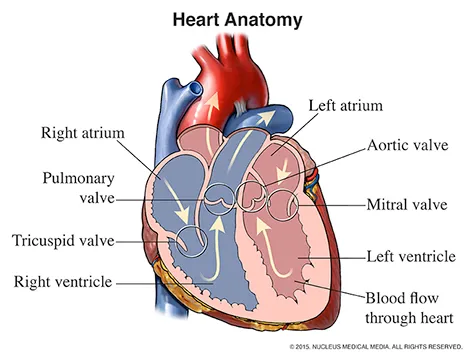
The heart is made up of four valves—aortic, pulmonary, mitral, and tricuspid—each playing a crucial role in keeping blood flowing in the right direction. These valves act like one-way gates, opening and closing with each heartbeat to ensure blood moves efficiently through the heart’s chambers and onward to the lungs and the rest of the body.
The mitral valve, located between the left atrium (upper left chamber) and left ventricle (lower left chamber), controls blood flow from the lungs into the heart before it’s pumped out to the rest of the body. The tricuspid valve, between the right atrium and right ventricle, manages blood flow from the body to the lungs for oxygenation (Figure 1). Because they regulate blood entering and exiting the heart’s main pumping chambers, these two valves are especially important to overall heart function.